The claim file, already written.
When robots, sensors, and vendors share a site, a loss produces fragments: each vendor’s own log, on its own clock, none agreeing. Pask seals one signed record for the whole engagement, however many robot actions it contains, so the evidence arrives with the first notice of loss. Because the record is the site’s, not any vendor’s, it settles which robot did what without asking each vendor to adjudicate its own logs. You read a timeline instead of rebuilding one.
The same record reads at every desk: claims fast-tracks the routine cases and holds down loss-adjustment expense, underwriting prices the site and not the class, subrogation starts from a named counterparty, and the actuary reserves on facts instead of a placeholder.
Engagement-receipt standard
PASK-00045
Outcome
COMPLETED
- Time
- July 2, 2026 · 14:22 CDT
- Site
- Wilder Management Reference Site (site:res-001)
- Place
- North Service Yard
- Human
- Service actor: J. Hale (illustrative)
- Asset
- Patrol Robot 04
- Service
- Cadence: scheduled field visit
- Actions
- ✓Firmware verification
- ✓Mobility inspection
- ✓Sensor clean
- Next
- Next scheduled cadence visit: August 2, 2026
Verified
You already know this shape. Telematics turned driving behavior into a signed evidence layer, and a line that once priced on proxies began pricing on facts. Automated worksites have no such layer yet. A signed engagement record is it: the evidence a robotics book can be underwritten, adjudicated, and reserved on, instead of a reconstruction assembled after the loss.
US robot installations are rising, and the exposure lands on multi-vendor sites faster than the evidence to price it. Under Federal Rule of Civil Procedure 37(e), a court can sanction a party for electronically stored information it failed to preserve, and machine logs are overwritten within hours. OSHA is citing robot work cells. A claim now turns on records that were never built to survive a dispute, and a sealed engagement record is the one that does.
The full ESI, spoliation, and FRE 902(13)/(14) crosswalk lives on the compliance page.
Is robotics a bookable class yet?
Robotics rides general-liability and commercial-property codes today. A dedicated, evidence-priced class becomes bookable when the risk is measurable, spreadable, non-concentrated, adjudicable, and litigation-shaped. Here is where a signed engagement record fits each test, and where it becomes the trigger and evidence layer a parametric robotics cover could rest on. Read it here or print it.
Can you measure the risk?
Today
Reserving rides on operator anecdote. There is no signed record of what the robots actually did.
With a signed record
Every authorized engagement seals one tamper-evident receipt: the executing agents, the site, the engagement window, the outcome_state, and the approval it ran under. Aggregated across sites and quarters, the stream is designed to become the first signed dataset for robotics-exposed reserving.
Is there enough shared risk for reinsurance?
Today
Book-level exposure is opaque, so treaty submissions carry an unknown-unknown premium.
With a signed record
The same receipt stream aggregates at the book level. A cedent shows a treaty underwriter signed, auditable exposure, site by site and period by period, instead of a spreadsheet.
Is the risk concentrated or diversified?
Today
Every robotics-exposed site looks the same to the class code, so good operators subsidize bad ones.
With a signed record
A well-instrumented site presents a signed operational record at bind and at renewal: engagement volume, exception history, participant roster. The underwriter prices the site, not the class: schedule rating on evidence, debits and credits earned against a signed history instead of a blunt class code.
Can claims be adjudicated without eating profitability?
Today
An FNOL investigation touches five or more vendor clouds, none a party to the policy, and reconstruction runs for weeks.
With a signed record
The signed record arrives with the FNOL: every participant named, every timestamp signed, exceptions separable from routine work. Routine cases fast-track; only the contested ones go to SIU review. The lever is loss-adjustment expense (LAE): the record collapses the multi-vendor reconstruction that drives LAE on disputed robot claims.
What is the litigation environment?
Today
Discovery is a scramble across partial logs, and cases settle to end the reconstruction rather than resolve the merits.
With a signed record
The receipt is designed to be the discovery artifact: signed at the engagement, tamper-evident, independently verifiable, every participant named. This is the criterion the market validates, not the vendor.
“Witnessed by Pask” is a checkable fact about a site’s record: the site runs Pask and holds one signed, tamper-evident record per authorized engagement, verifiable by any party without our software. “Pask-Certified” is a separate audited standard, still in design, that publishes with the first pilot. When a submission claims either badge, the claim is checkable:
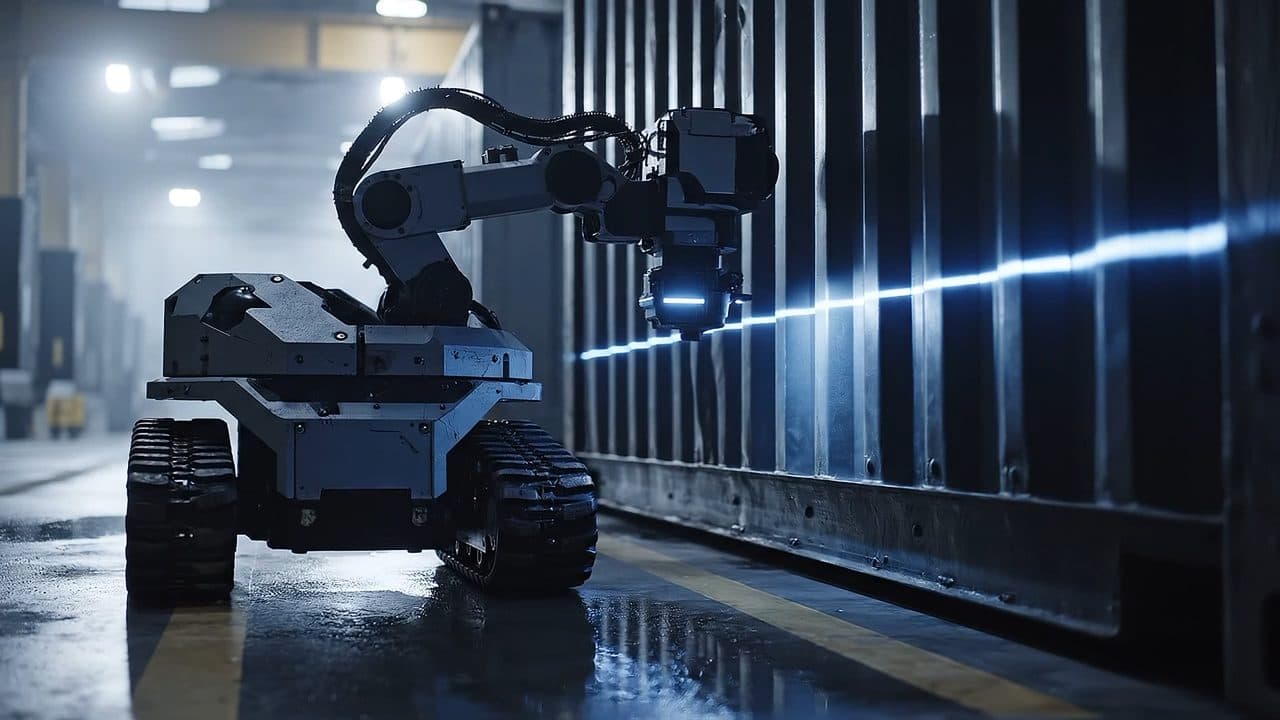
A carrier prices what it can see. Pask makes an automated site legible: one signed record per engagement, owned by the site, readable by you.
Pressure-test it against a real book. Bring us the cases where a signed engagement record has to hold: a disputed claim, a class you cannot price, a treaty you cannot cede.